Subject that
organises
the work
There is a recurring idea that the office needs to soften its presence, almost to step back, so that work can happen. Neutral surfaces, objects reduced to the bare minimum, everything designed not to distract.
At the Faria Lima office, this idea is rethought.
The space alternates between presence and emptiness, asserting itself and occupying the foreground at some moments; at others, it recedes and maintains focus.
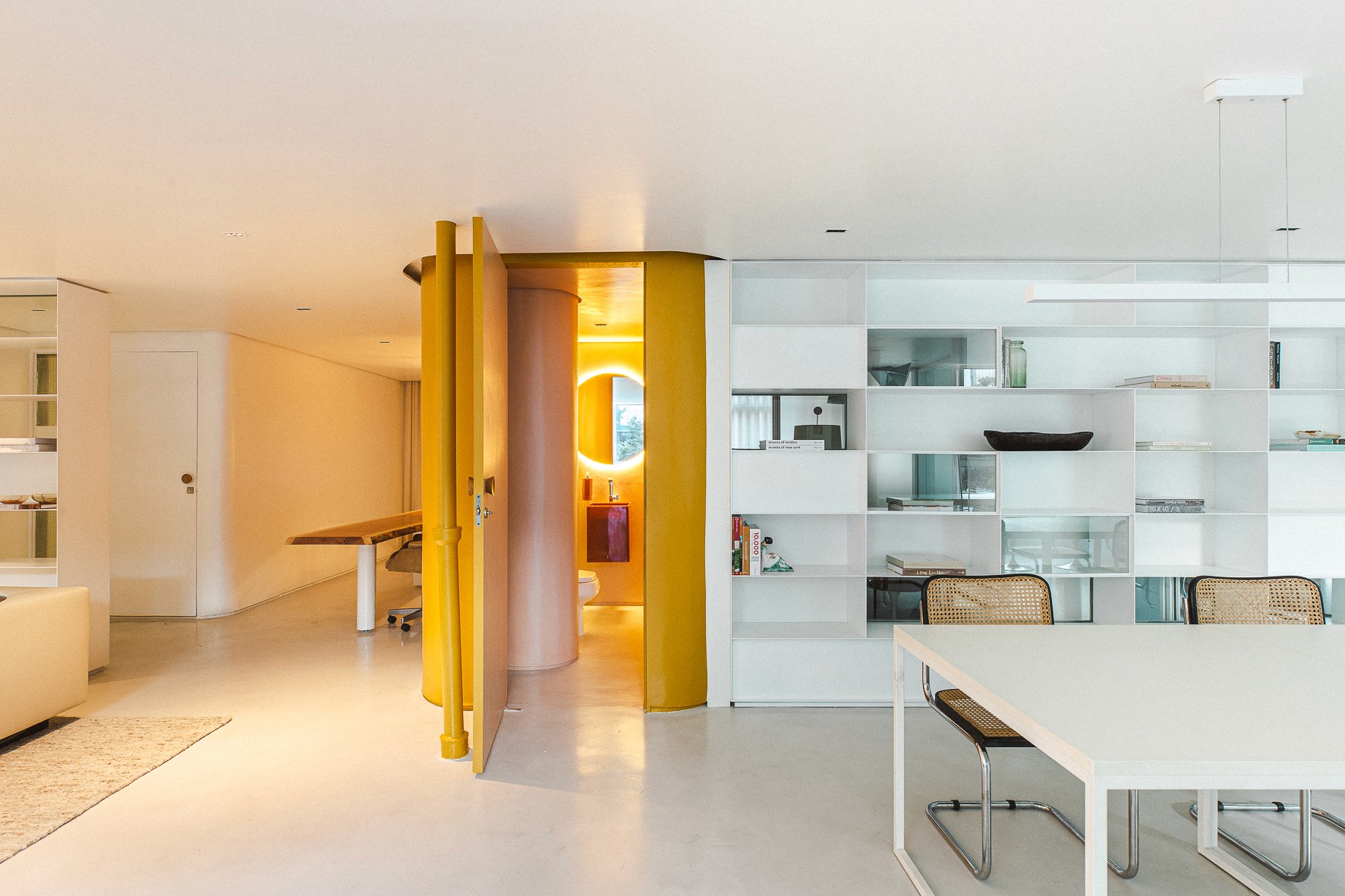
At the same time, the hydraulic axes, already predetermined by the building’s own logic, establish fixed points that guide the layout. Bathrooms, shafts and infrastructure are treated as anchors from which the space is organised. Along this central axis, the presence of more vivid colours runs through the project and becomes a recurring element, perceptible from different points in the office, without interfering with the more concentrated uses.
Among these elements, the project develops by precisely adjusting solids and voids, articulating circulation, permanence and use within a single continuity.
Click on the images
to discover the complete project.
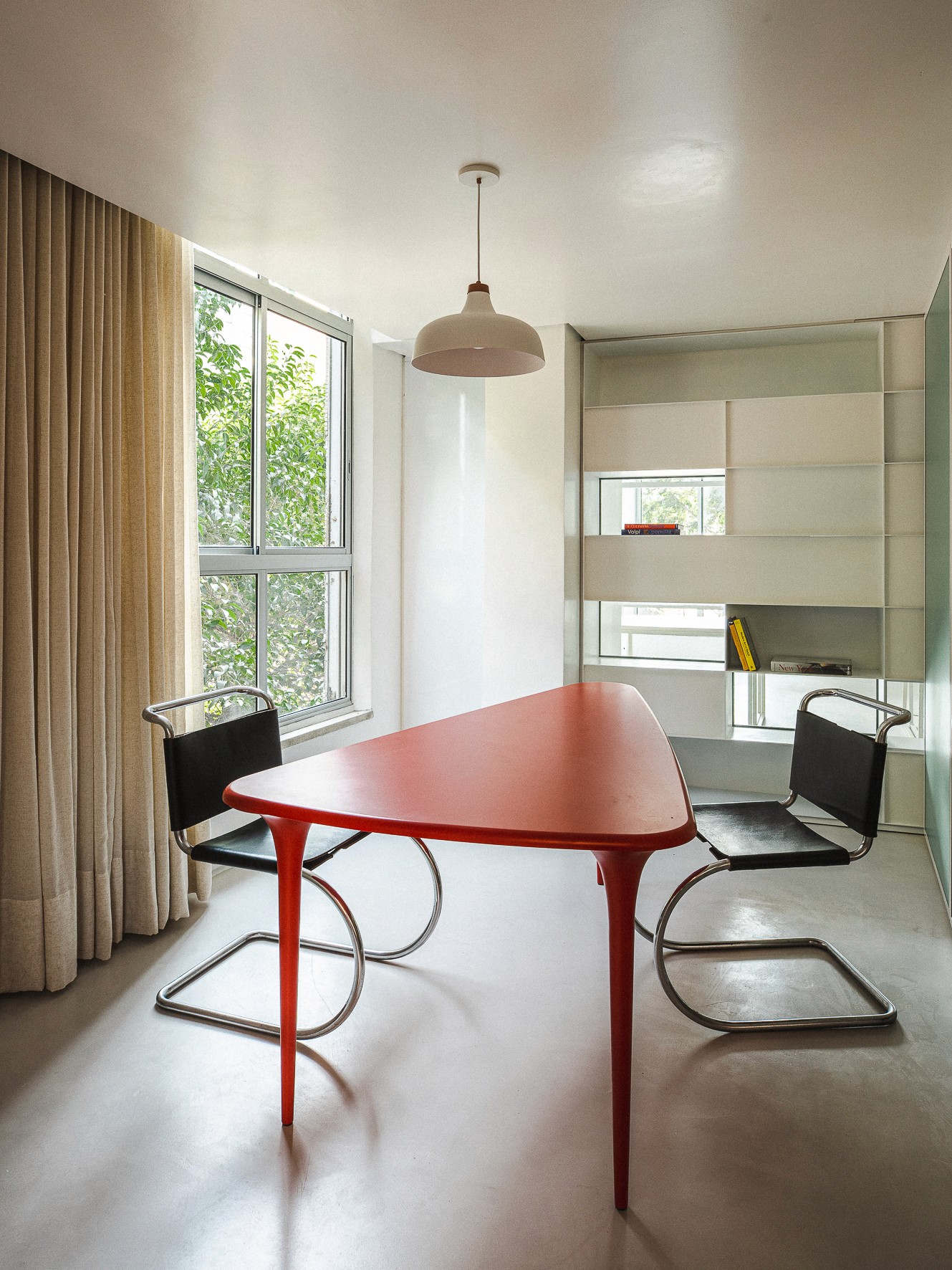
The long, continuous table extends this logic into the visual field. It traverses the space as a continuous plane that organises and establishes a clear axis of conviviality. The chairs, with their apparent structure, follow this design without softening the gesture of sitting, maintaining the precise reading of the whole.
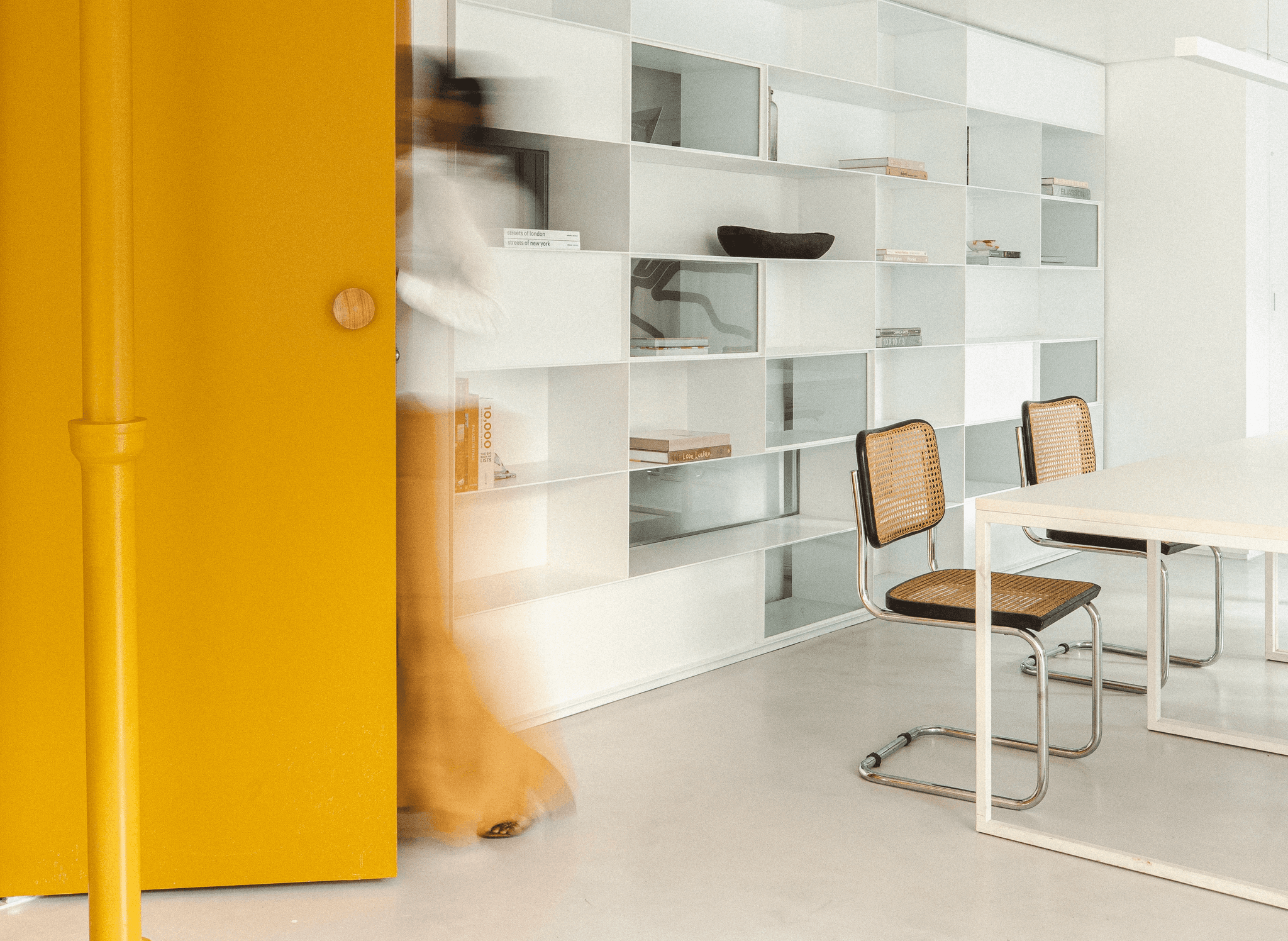
The monolithic floor, executed without joints, reinforces this continuity. By eliminating cuts and interruptions, it expands the visual field and allows the elements to stand out without fragmenting the space. In the background, the shelving resumes the interplay between solids and voids, introducing rhythm without enclosure and maintaining permeability between the different uses.
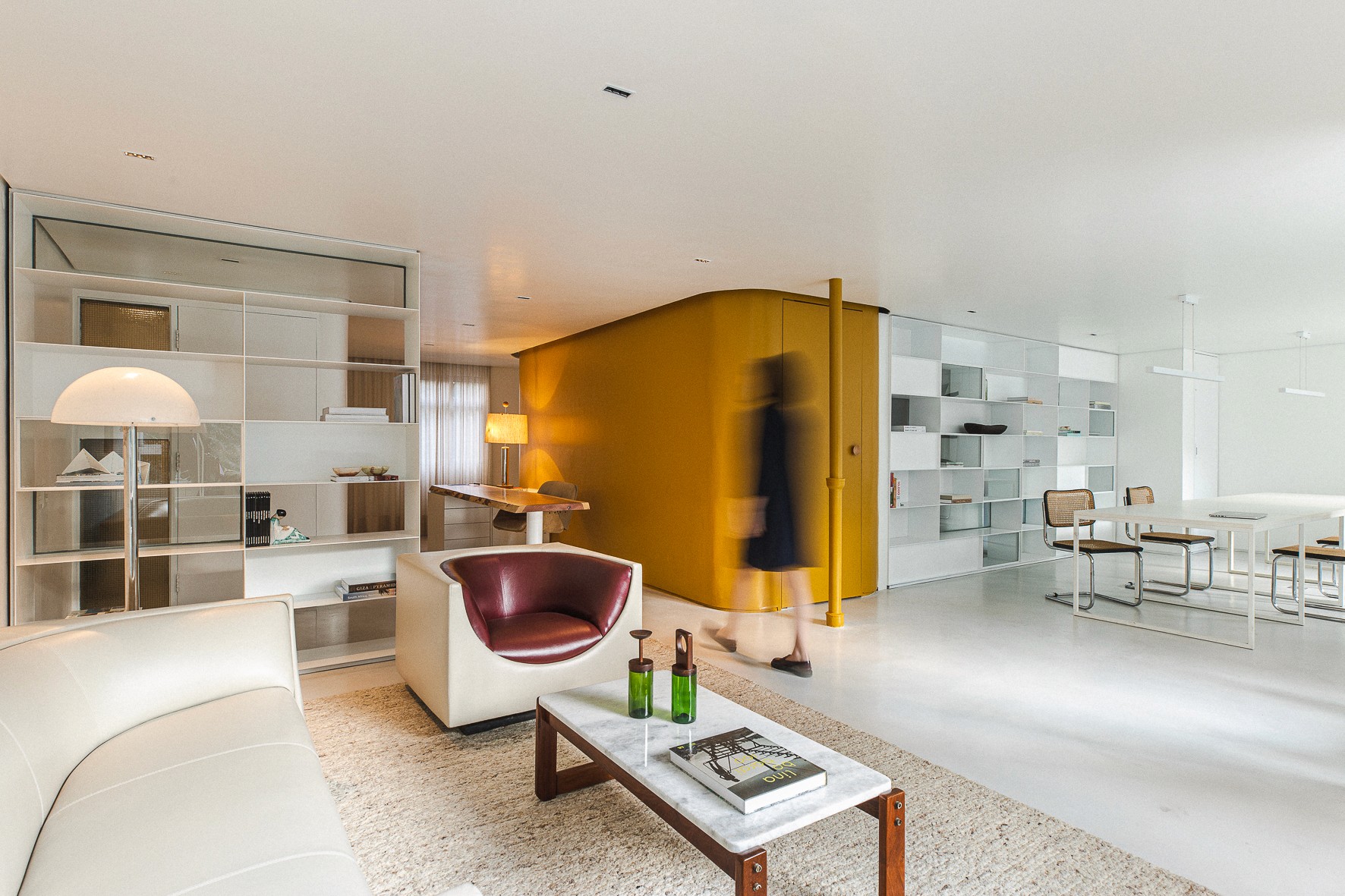
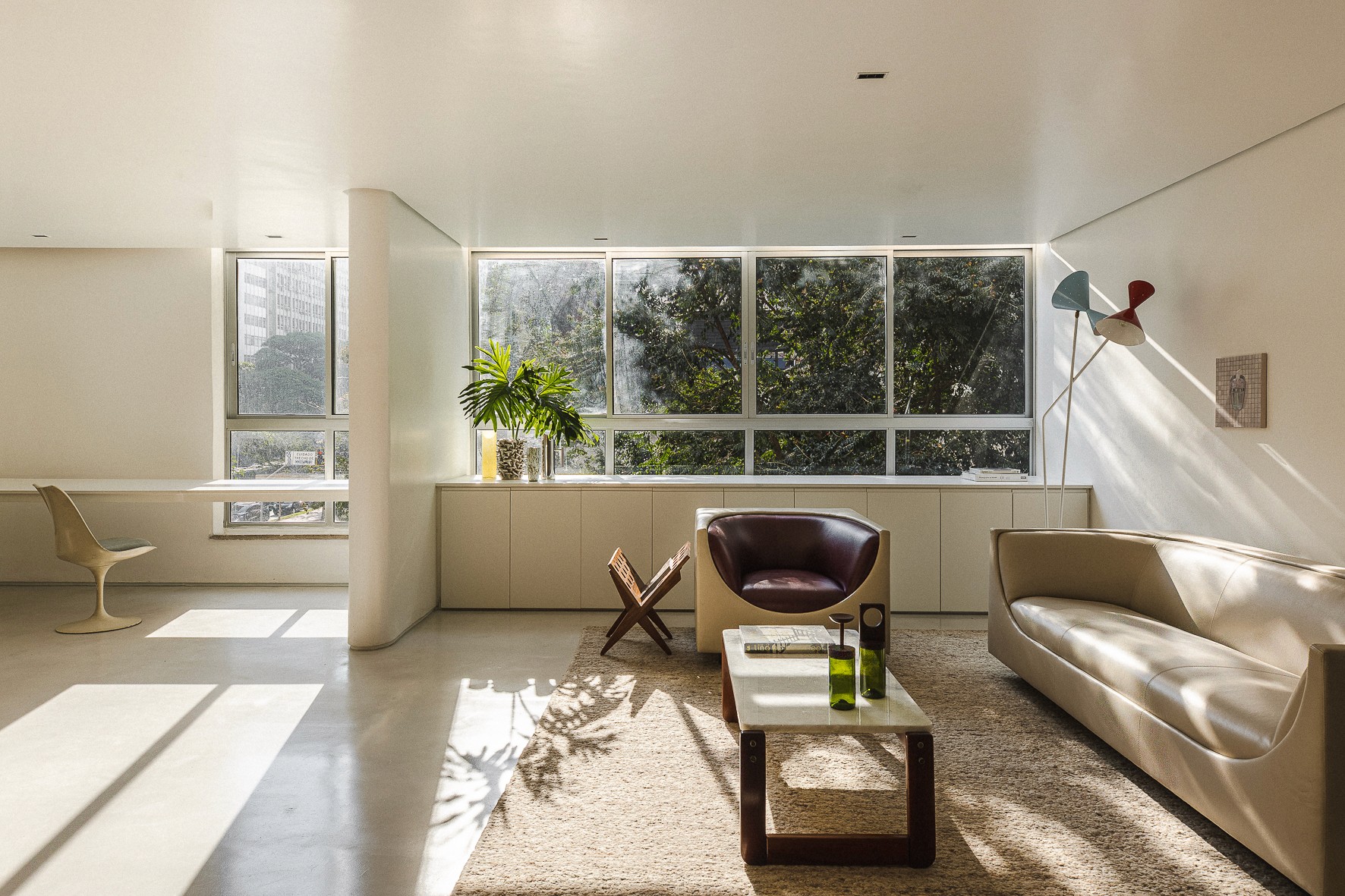
The material palette is organised in a neutral field, continuous flooring, light linen curtains, furniture in pale tones, establishing a quiet base. Over it, points of colour appear in a targeted and strategic way, whether along the bathroom axis, in elements of the furniture or in the shelving composition itself, interrupting the regularity and introducing variation.
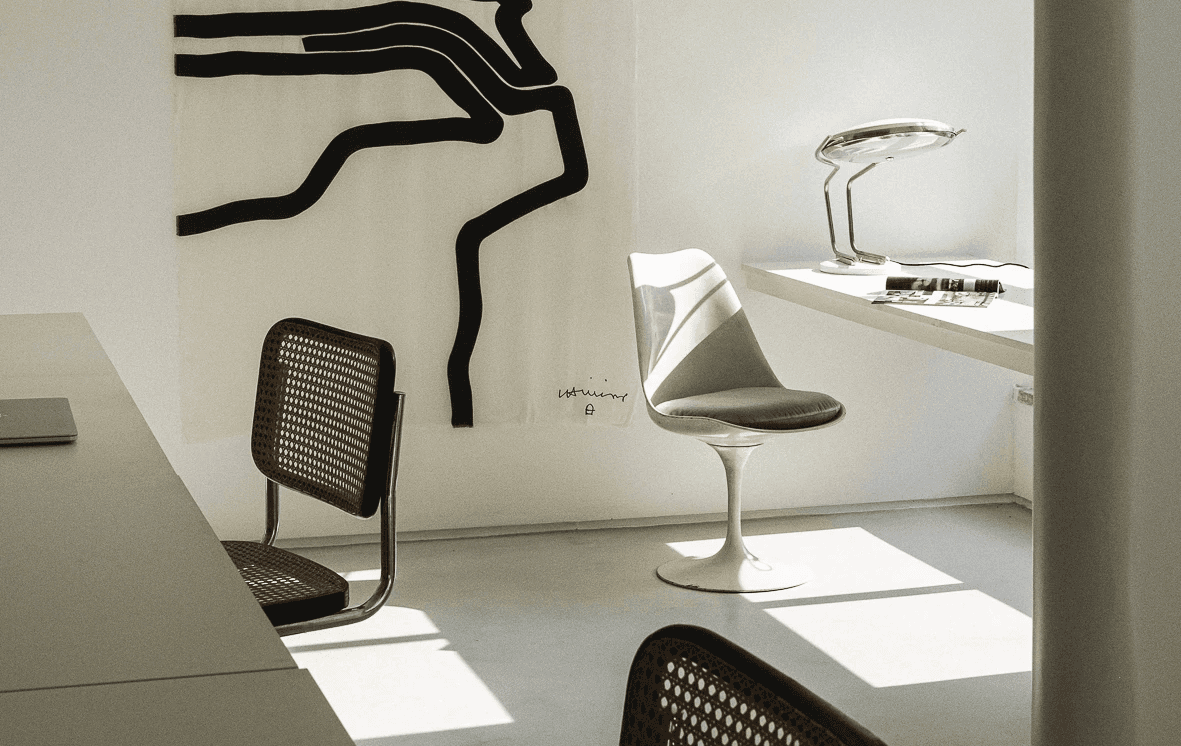
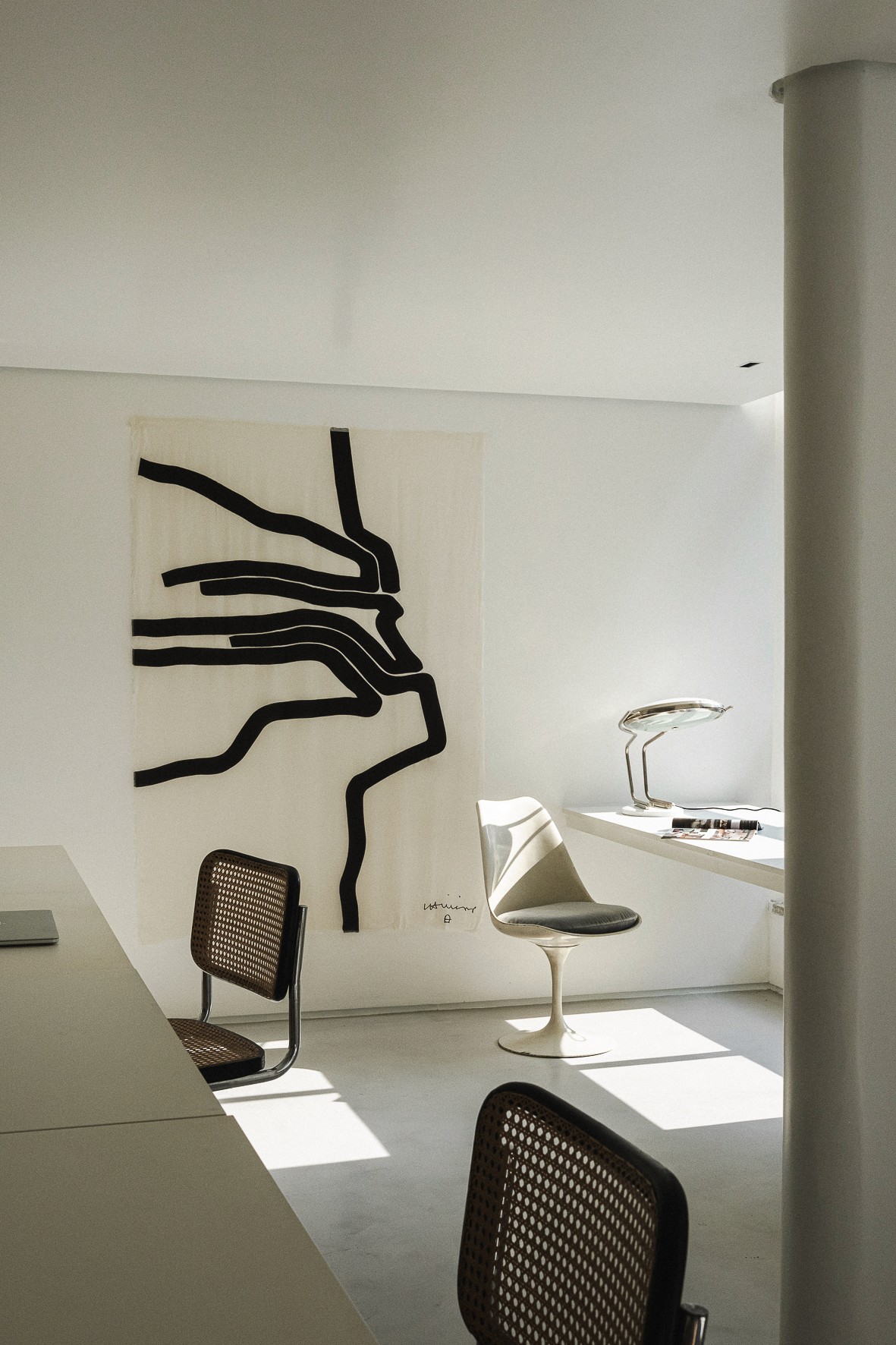
Each material sustains a specific presence, and it is from this combination that the space guides use, alternating between presence and retreat according to the moment: focus, passage, attention or conversation.
The work happens within this logic. The body understands where to sit, where to lean, where to move through. The arrangement of the chairs, the support surfaces and the distances between the elements already anticipate use, reducing the need for constant adjustment.
The eye finds pauses as well as continuity.
There is a clarity that comes from the coherence between proportion, materiality and ergonomics, where each decision supports both form and long-term permanence and comfort over time.
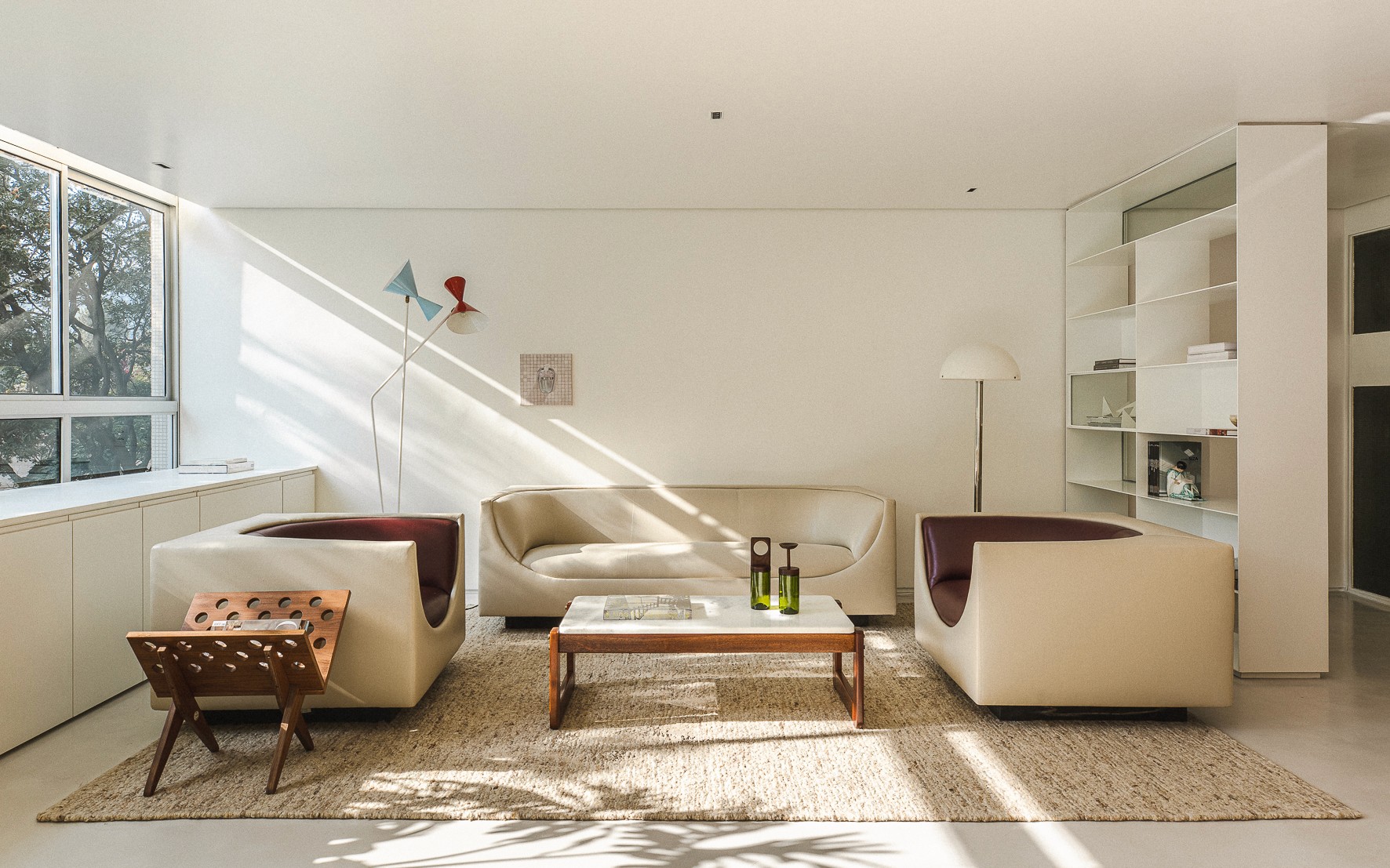
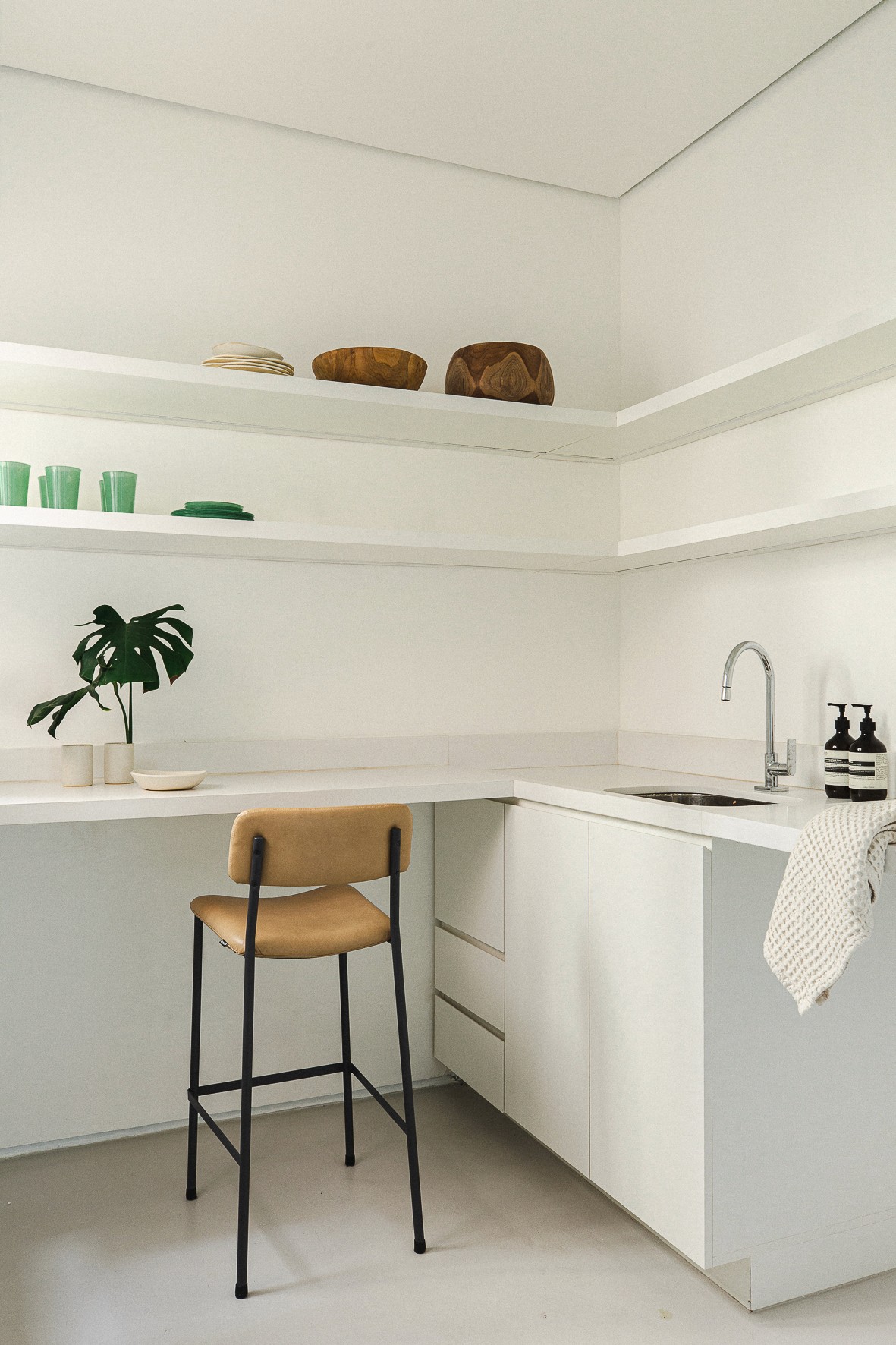
Beyond the work areas, the project incorporates a social space that expands the office’s use as a place for meeting and socialising, introducing another scale of occupation within the routine.
Support areas, such as cupboards, pantry and reception, are also integrated into the whole, taking on a more restrained presence and, at times, putting tension on the more continuous language of the main space.
This logic becomes visible in motion.
A simple action, such as arriving, setting down the computer, sitting down, crosses the space effortlessly. There is no adjustment, no hesitation.
The environment has already anticipated that movement.