MATTER
AND MEMORY:
BETWEEN STONE,
METAL AND TIME

MATTER
AND MEMORY:
BETWEEN STONE,
METAL AND TIME

RESIDENCE
NEW YORK

São Paulo, 2024

130m2 (completed)

Collaborators: Roberta Alecrim

Constructor: MSD Construção

Photos: Miti Sameshima

Between tones and textures, a new interpretation of the essential.

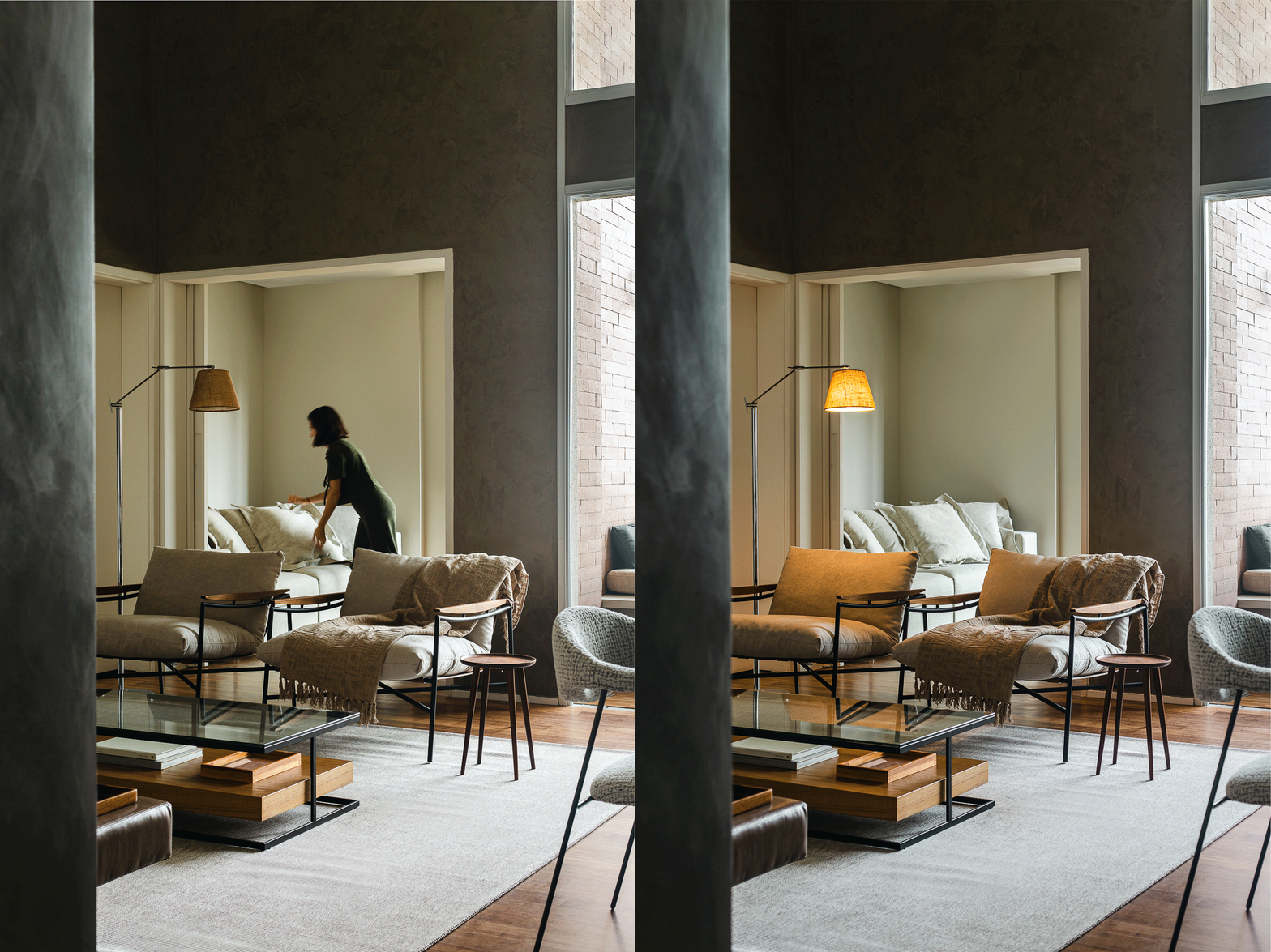
The interior design project took as its starting point the aesthetic already established upon delivery of the flat: wooden flooring, cement-like texture and ceramic brick walls define the neutral and understated base of the spaces.

The proposal consisted of composing a new interpretation over this base, balancing cool and warm tones in the choice of fabrics, furniture and bespoke joinery elements.


The layout was designed according to the client’s routine, who values moments of hosting, as well as integrating the interior with the external view provided by the property.
Clodomiro Residence

Clodomiro Residence

São Paulo, Brazil
2025
200m²
Collaborators: Roberta Alecrim and Francisco Lecan
Engineering: Laer Engenharia
Photos: João Prado

São Paulo, Brazil
2025
200m²
Collaborators: Roberta Alecrim
and Francisco Lecan
Engineering: Laer Engenharia
Photos: This is Us

The Clodomiro Residence was designed to welcome a mature daily life, built over decades by someone who knows their own habits, interests, and ways of living. Based on this, the project interprets these demands through its own architectural repertoire, transforming observations, memories, and desires into spatial relationships, materialities, and paths.

The project is born from the observation of these already consolidated rituals: hosting, walking through the house, working, cooking, collecting objects, and living with memories accumulated over time. The goal is not only to accommodate these uses, but to build an architecture capable of giving shape, clarity, and continuity to the experiences that sustain them.

The Clodomiro Residence was designed to welcome a mature daily life, built over decades by someone who knows their own habits, interests, and ways of living. Based on this, the project interprets these demands through its own architectural repertoire, transforming observations, memories, and desires into spatial relationships, materialities, and paths.

The project is born from the observation of these already consolidated rituals: hosting, walking through the house, working, cooking, collecting objects, and living with memories accumulated over time. The goal is not only to accommodate these uses, but to build an architecture capable of giving shape, clarity, and continuity to the experiences that sustain them.

Slide 1

Axes of circulation, storage and permanence structure the organisation of the residence. Present in the flooring patterns, the shelving and the joinery design, they establish a base capable of giving order to the diversity of references, artworks and collections present in the house.

This silent structure organises journeys, guides the gaze and creates a counterpoint to the richness of information accumulated over time, allowing objects, memories and daily uses to coexist within the same spatial logic.

Axes of circulation, storage and permanence structure the organisation of the residence. Present in the flooring patterns, the shelving and the joinery design, they establish a base capable of giving order to the diversity of references, artworks and collections present in the house.

This silent structure organises journeys, guides the gaze and creates a counterpoint to the richness of information accumulated over time, allowing objects, memories and daily uses to coexist within the same spatial logic.

The creative process was driven by a central question: how to construct an environment capable of welcoming the rituals of hosting without compromising the flow and spaciousness of the space?

The answer emerged from the articulation of different moments in the home's social life. The bar, kitchen, dining and living areas were conceived as complementary situations, connected by a continuous spatial sequence. At the same time, the design creates framings that guide the eye towards two elements that define the experience of the place: the urban landscape revealed through the windows and the collection of objects gathered by the resident over the years.

The creative process was driven by a central question: how to construct an environment capable of welcoming the rituals of hosting without compromising the flow and spaciousness of the space?

The answer emerged from the articulation of different moments in the home's social life. The bar, kitchen, dining and living areas were conceived as complementary situations, connected by a continuous spatial sequence. At the same time, the design creates framings that guide the eye towards two elements that define the experience of the place: the urban landscape revealed through the windows and the collection of objects gathered by the resident over the years.

learn more about
the creative process

The sobriety of the materials reinforces this intention. The architecture establishes a stable visual base, capable of accommodating the diversity of objects, works and references present in the residence without competing with them.

The grey stone became one of the structuring elements of the project. From it, a palette marked by mineral tones, continuous surfaces and contained contrasts is developed. Stainless steel accompanies this chromatic neutrality, while sucupira wood introduces warmth and depth.

White planes create visual pauses and help to balance the material density of the overall design. The result is an atmosphere that absorbs urban and industrial references without losing domestic scale, allowing architecture, art and daily life to coexist in balance.

The shelving unit spans the social spaces and establishes continuity between different moments in the house. While organizing pathways and framing views, it also frames everyday moments. Its presence connects different situations within the home, functioning as a guiding element within the space.

This material construction was heavily influenced by references linked to an urban and industrial aesthetic and by a contained palette. These references appear in the greyish tones, in the controlled contrasts, and in the direct relationship between material, structure, and use.

There are echoes of urban interiors marked by metal and stone, filtered by the domestic scale and by the stories accumulated over time by the resident.
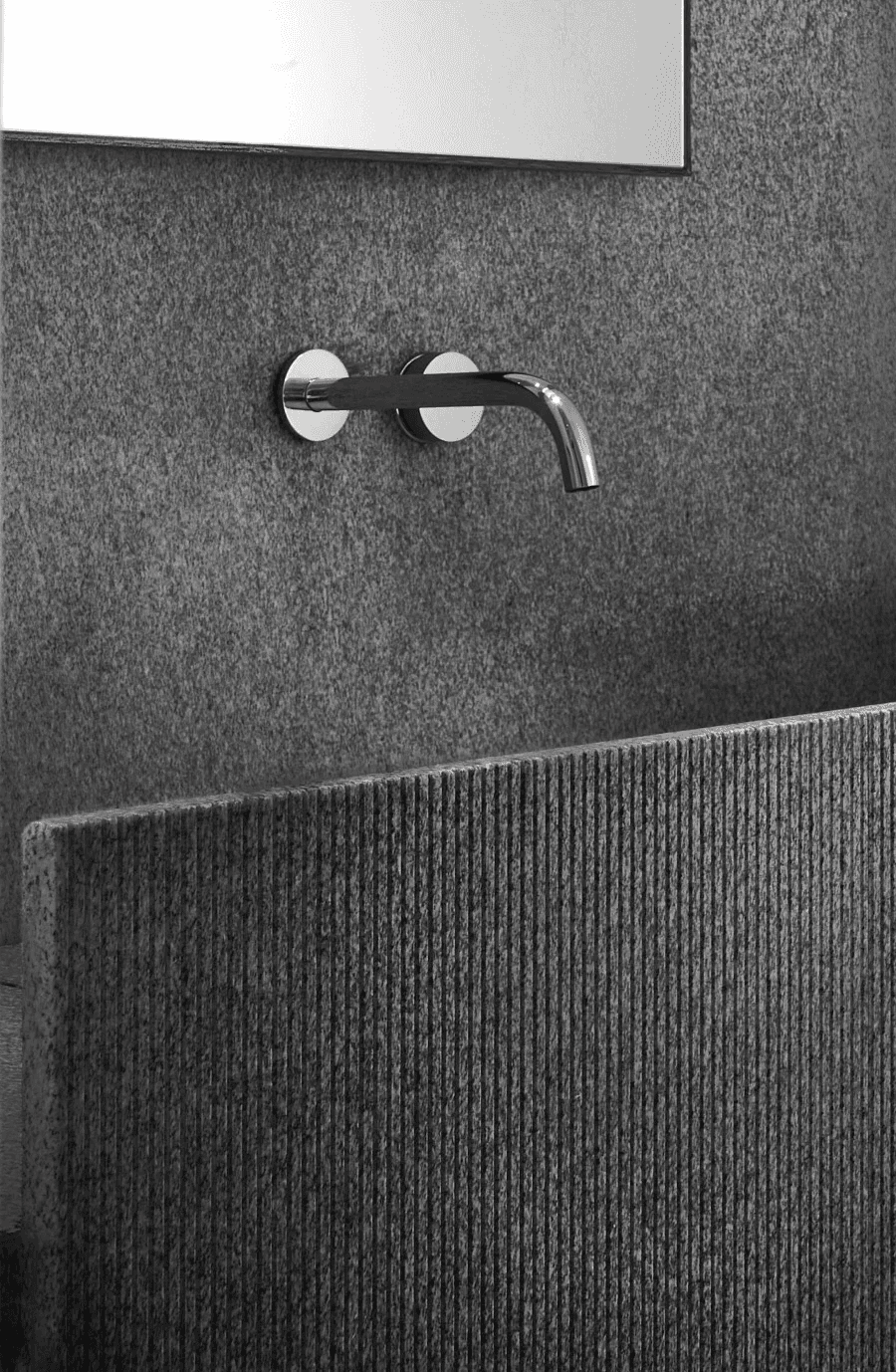
The material choices follow the same logic throughout the entire residence, adapting to the particularities of each environment without losing unity.

In the bedrooms, the timber panels add warmth and depth to the composition, contributing to a more private and welcoming atmosphere. In the bathrooms, stone, metal and continuous surfaces highlight the constructive rigor of the design, where material, proportion and detail act in an integrated way.

Between the city and the collection, between the rigour of the material and everyday gestures, the Clodomiro Residence constructs a particular way of living: silent, precise, and deeply connected to the life of those who occupy the space.

This is just one of the possible pathways within the project.

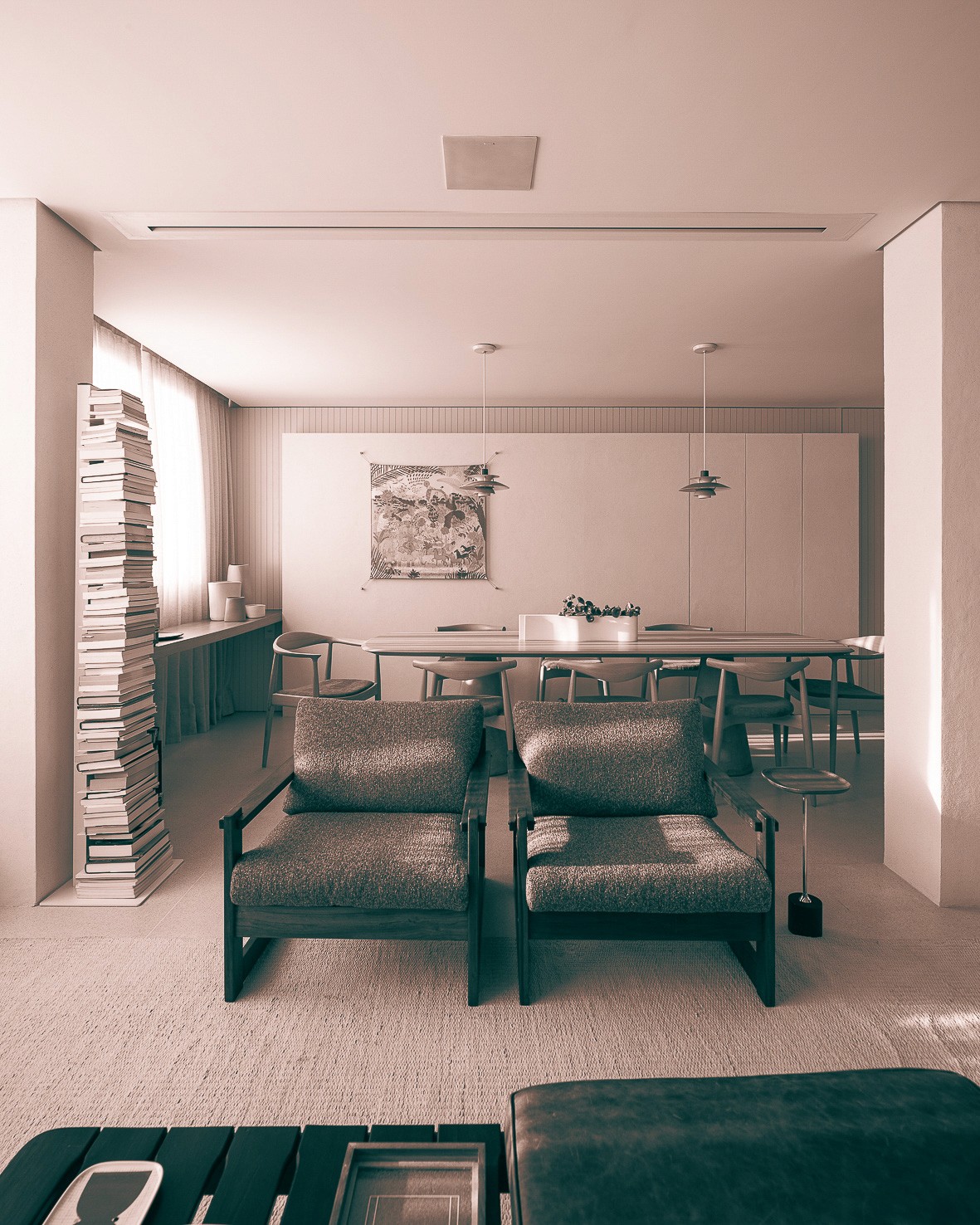
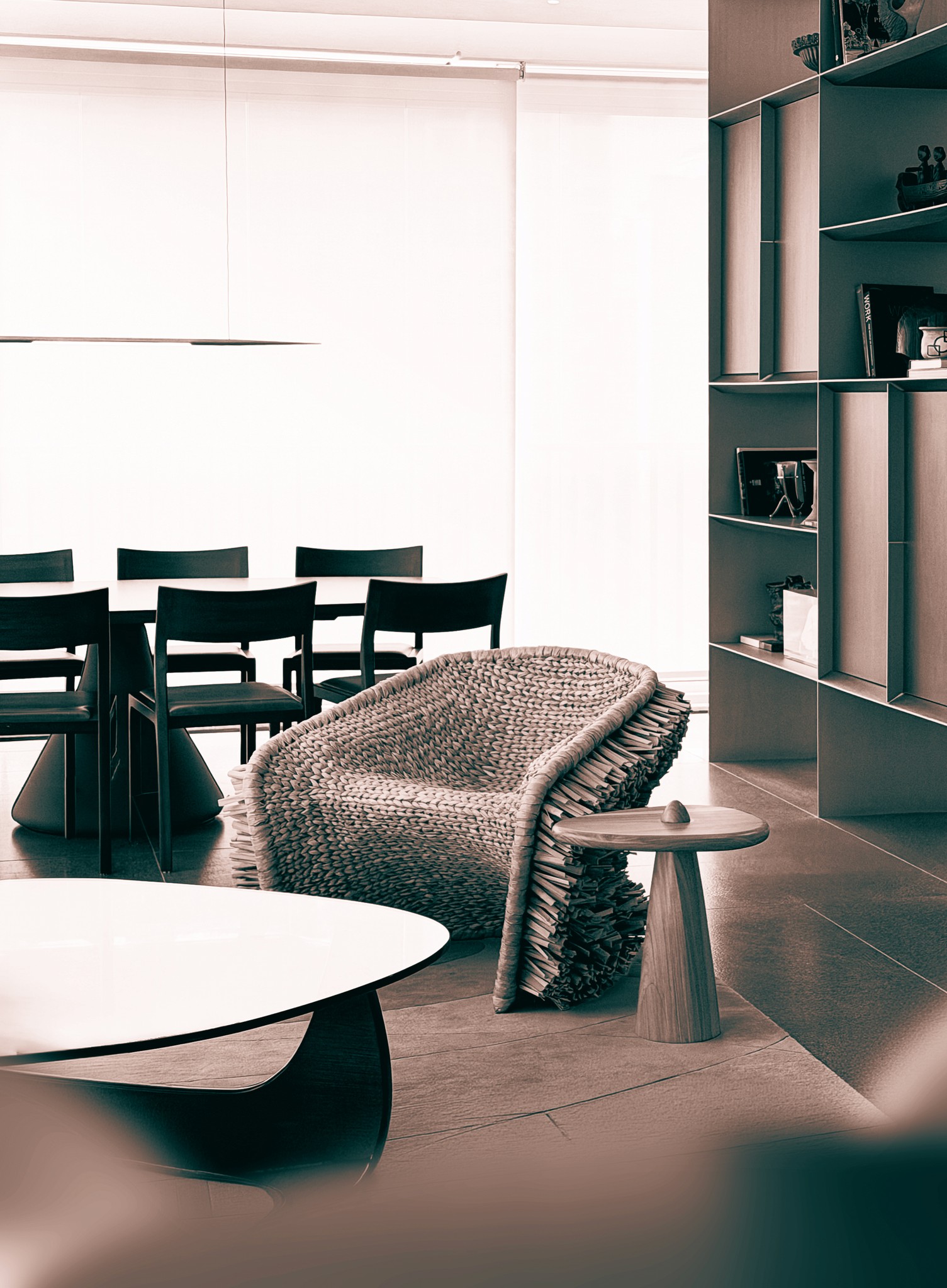
Other details about its creative process, materialities, and spatial decisions can be explored in the ERRIÁ EDITORIAL.
editorial: Matter and memory

editorial:
Matter and memory

DISCOVER THE

ERRIÁ EXPERIENCE

get inspired
with ERRIÁ,
monthly.

SÃO PAULO

ola@erria.com.br

+55 11 9 6383 2494

MILAN

ciao@erria.com.br

+39 344 5377986

SÃO PAULO

ola@erria.com.br

+55 11 9 6383 2494

MILAN

ciao@erria.com.br

+39 344 5377986

get inspired
with ERRIÁ,
monthly.