Where the body
meets the
space
Some objects establish a direct relationship with the body and, from that point on, begin to organise the surrounding space.
The armchair is one of them.
Places of permanence are one such element.
Before any formal reading, it is defined by fit, support and permanence. Height, inclination and density are not merely technical decisions; they are choices that determine how the body rests and for how long it remains there.
When observed across different projects, the armchair reveals variations that go beyond form. Each piece follows the rhythm of the space in which it is placed, absorbing its tensions, its scale and its atmosphere.
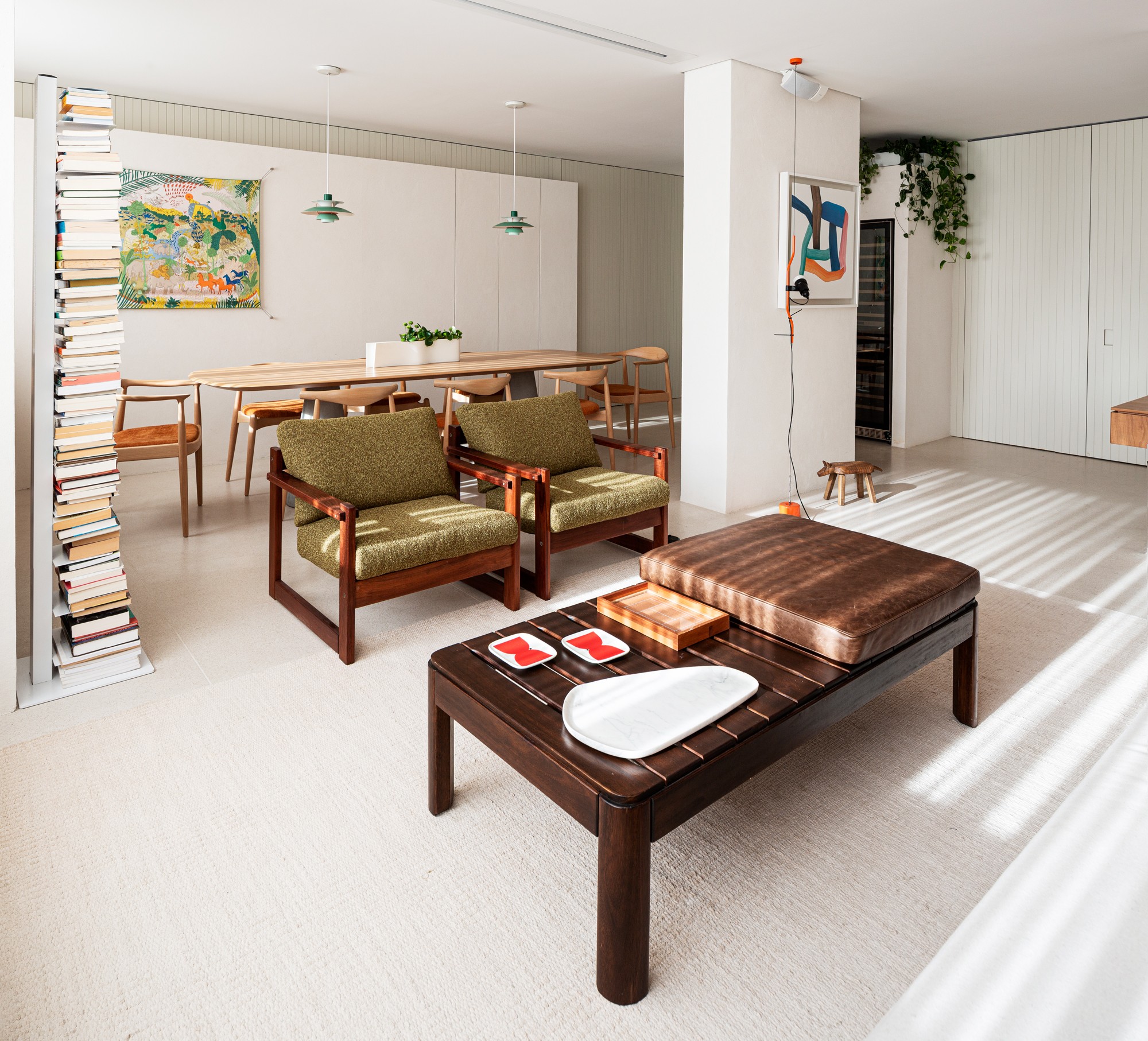
Click on the images
to discover the complete project.
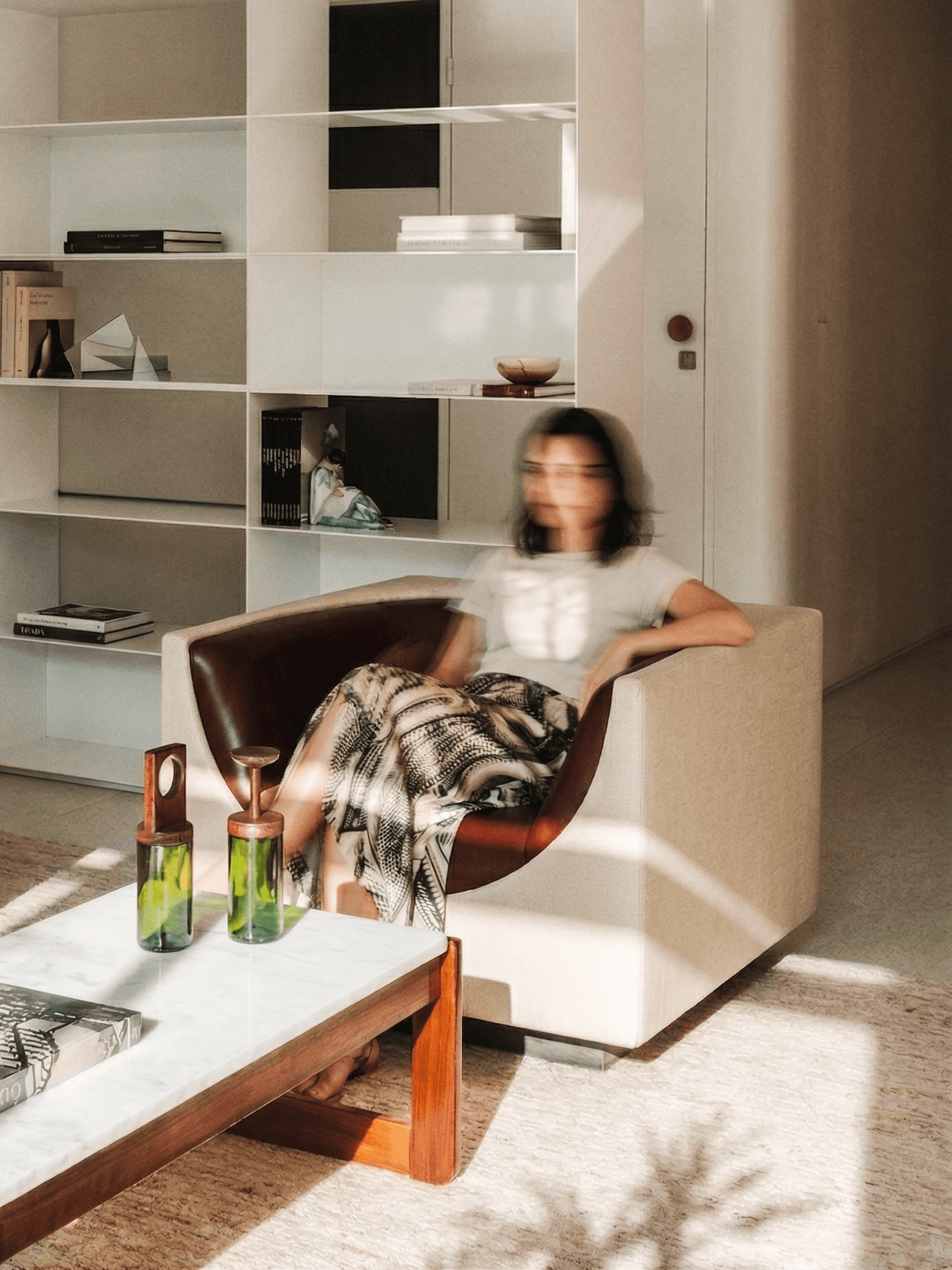
In the Faria Lima office, the Cubo armchair, by Jorge Zalszupin,
appears with clarity and restraint.
Created in the 1970s, its form seems carved from a single block, with straight lines and a compact volume that reinforces the geometric reading of the space. The deep upholstery introduces comfort, but within a well-defined limit.
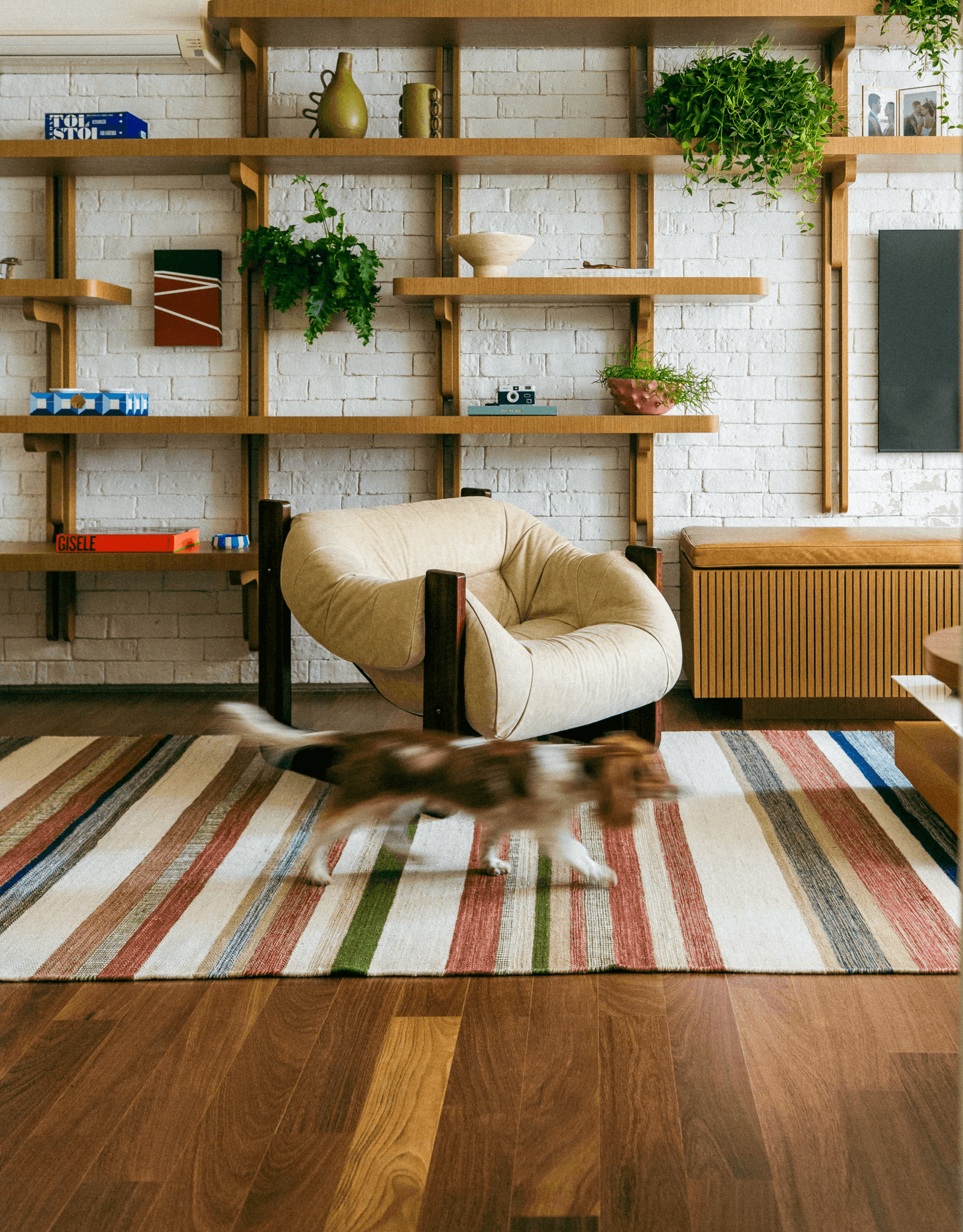
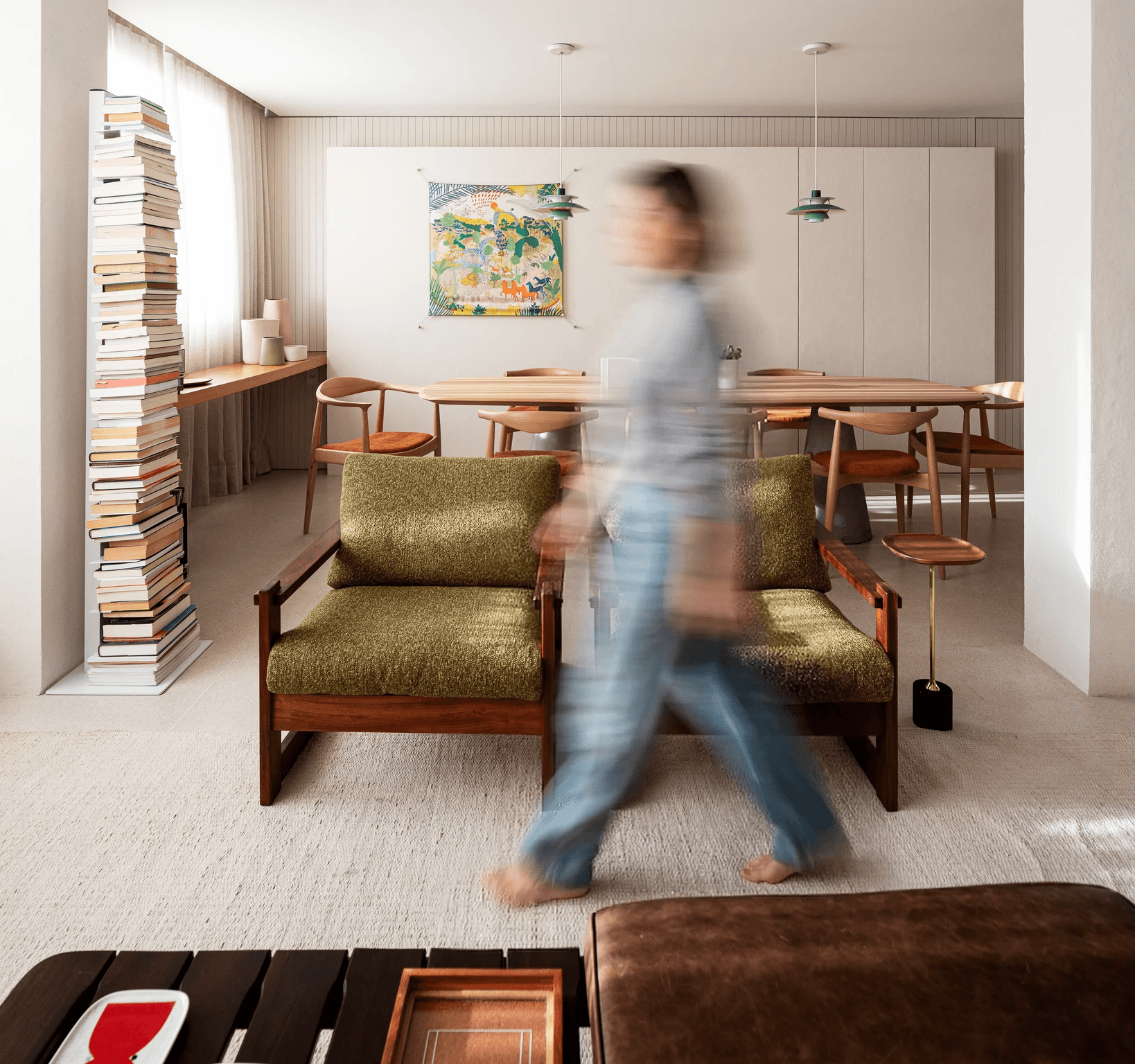
In the Pedroso Residence, the MP-97 by Percival Lafer,
further expands this relationship.
Also from the 1970s, its robust solid-wood structure supports loose cushions, generally in leather or suede. The piece offers a more tactile presence and a more relaxed comfort, supporting more prolonged use of the space.
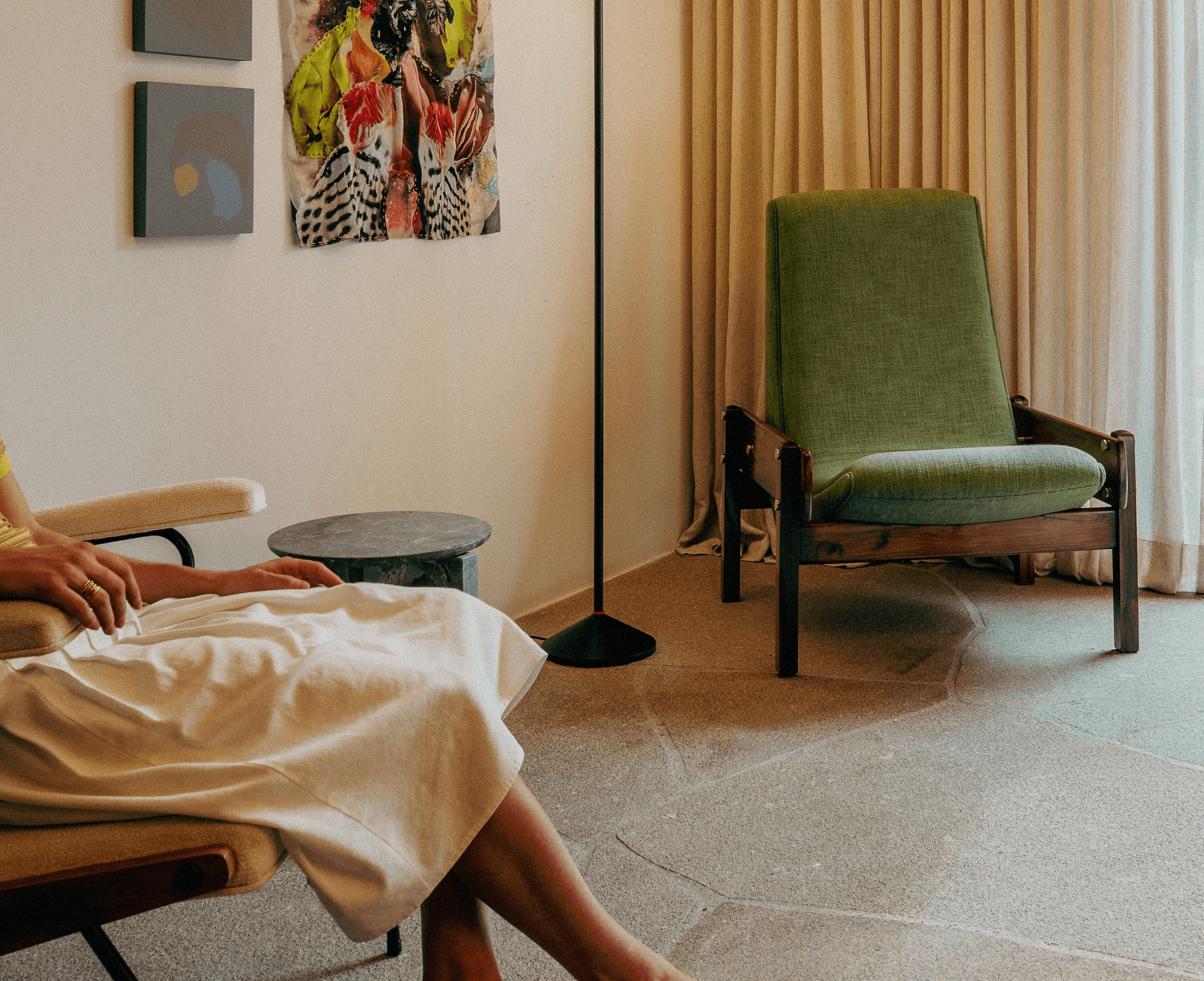
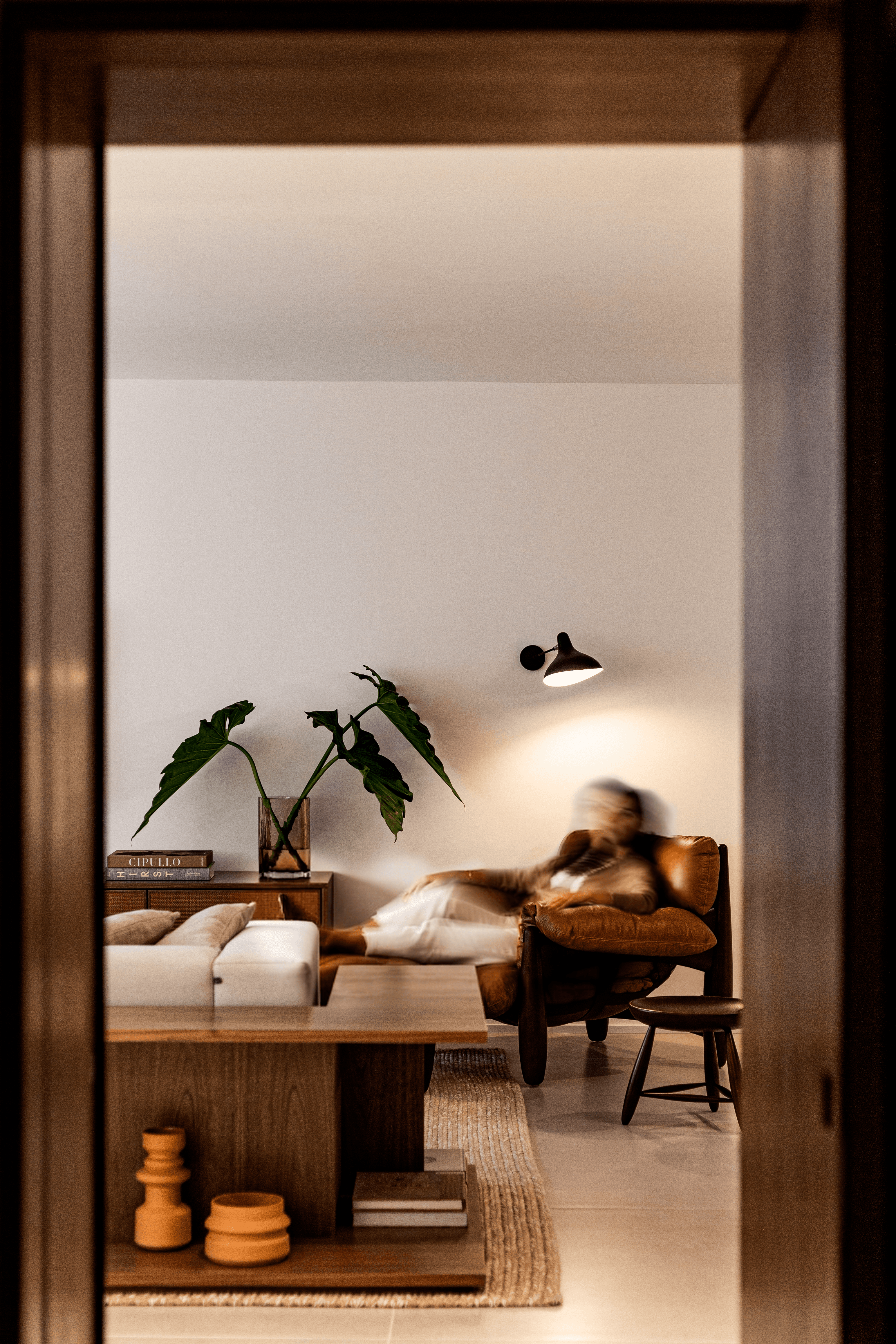
At Sagitarius, the Mole Armchair, created in 1957 by Sergio Rodrigues, embodies weight and permanence.
Internationally acclaimed, its solid wood structure supports wide leather cushions, creating a lower, more expansive seat. The piece alters the rhythm of the space, inviting prolonged lingering.
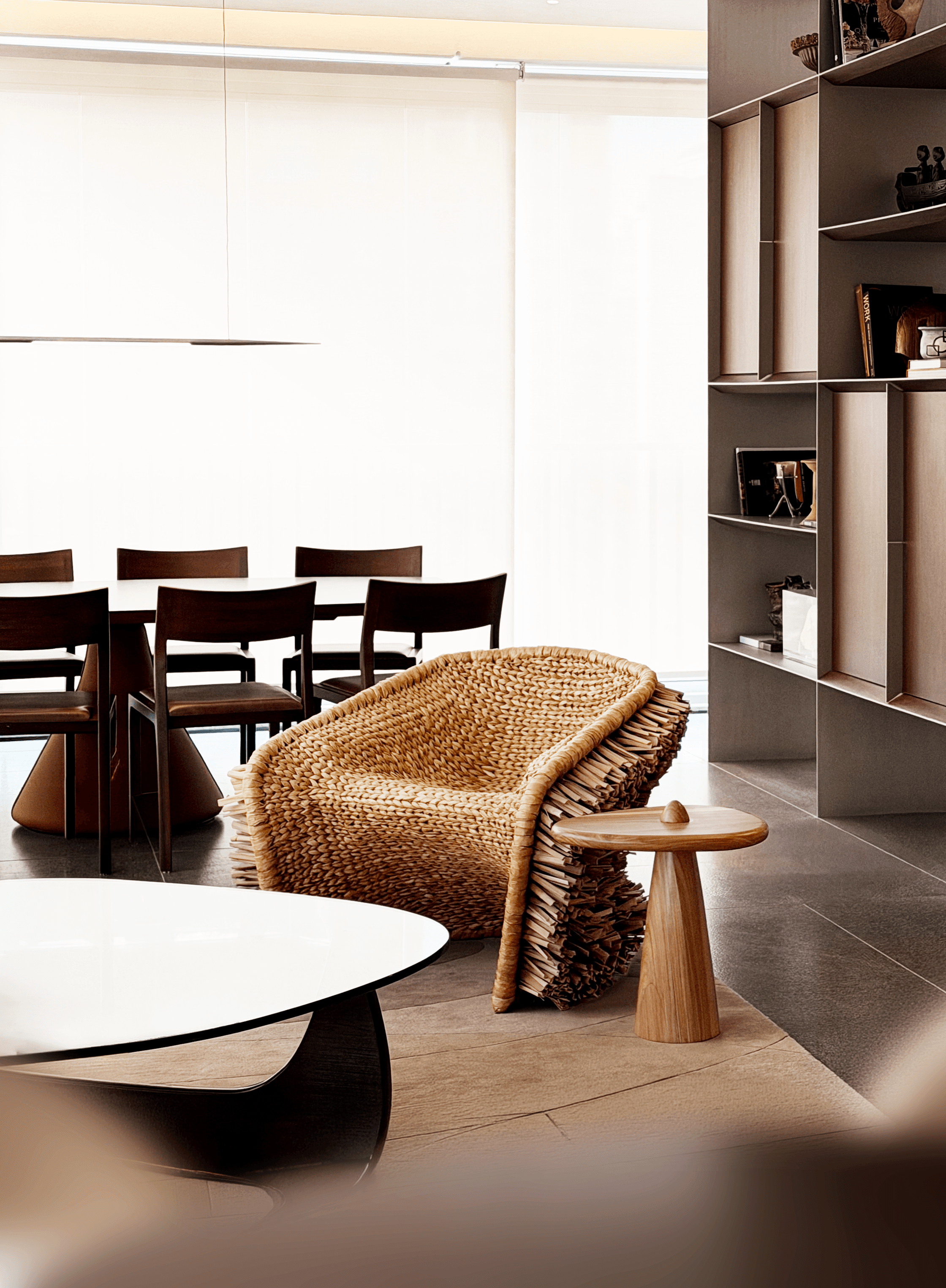
Meanwhile, on Clodomiro, Vidigal, created in 2010 by the Lattoog studio, offers a contemporary interpretation.
The combination of wood and leather appears in a lighter, more fluid structure, with an ergonomic design that shifts the relationship with the floor and introduces greater mobility in the space.